Textile Shopping Literacy
How to Evaluate Coyuchi Sheet Sets for Everyday Use
A sheet set has a quiet but demanding job: it must fit the bed, feel right against the skin, and hold up to repeated washing. To assess Coyuchi sheets for everyday use, look past the first impression. Fiber composition, construction, mattress fit, set contents, and care instructions reveal far more about how a set may work in your home over time.
Think of the bed as a small landscape, remade night after night. A fitted sheet is under tension at its corners; a flat sheet shifts with movement; pillowcases meet skin and hair for hours. The details that seem minor on a product page—15-inch pocket depth, a full-elastic edge, a cold-wash instruction—can become the details you notice most in daily life.
Begin with the fiber, not the finish
When comparing Coyuchi sheet sets, first identify what the fabric is made from. The product information supplied for the Organic Relaxed Linen Sheet Set describes it as 100 percent organic flax, grown in France and woven into linen in Portugal. That is a useful distinction: flax is the plant fiber, while linen is the textile made from it. A clear fiber description helps you understand what is actually touching your skin and gives you a starting point for comparing sets made from different materials.
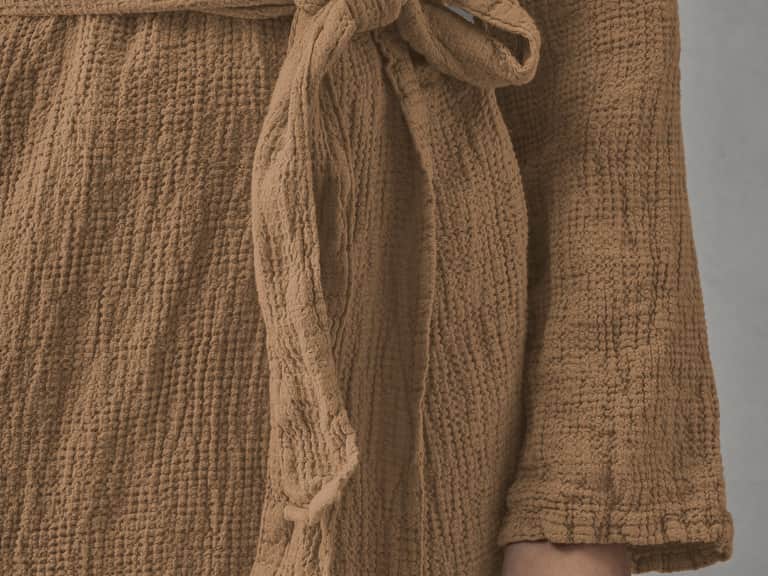
Fiber composition shapes the fabric’s natural feel and behavior, but it cannot tell the whole story. Linen is often valued for its distinctive texture, drape, and airflow. It can feel more substantial and irregular than a smooth cotton percale, especially when new. A relaxed or garment-washed finish may soften that first impression, though softness is a matter of preference rather than a universal measure of quality. Some sleepers enjoy linen’s visible slubs and easy, lived-in appearance; others prefer a smoother surface.
Descriptions of the Coyuchi linen set say the fabric is designed to soften with use and offer year-round comfort. Treat such language as a useful indication of the intended feel, not a guarantee that every sleeper will experience it in the same way. Sensitivity to texture, bedroom temperature, sleepwear, and personal preference all influence comfort. If you are accustomed to tightly woven cotton, give yourself time to consider whether a textured linen surface suits you.
Weight can add context when it is provided. One related Naturepedic linen sheet specification in the site’s bedding information lists a fabric weight of 185 grams per square metre. That figure belongs to that particular product description; it should not be assumed to describe Coyuchi sheets. When a product page does state a weight, use it as one comparison point rather than a simple quality score. Heavier fabric is not automatically better: the useful question is whether the fabric’s weight and hand match your comfort needs and climate.
Read organic claims with precision
“Organic” can be meaningful, but the word is most useful when you understand what backs it up. The supplied descriptions identify the Organic Relaxed Linen Sheet Set as GOTS certified. The Global Organic Textile Standard, commonly shortened to GOTS, is a textile certification with requirements covering organic fibers and processing. For shoppers, a certification offers more specific information than an unqualified sustainability phrase, though it does not answer every question about a product’s full environmental impact.
Look for the scope of a claim. Is the finished textile certified, or is the description referring only to the origin of the fiber? Does the page name the certification and explain what it applies to? In the Coyuchi product details supplied here, the flax is described as grown in France, the linen as woven in Portugal, and the product as GOTS certified. These are separate points in a supply chain, and keeping them separate makes the information easier to interpret.
Origin details do not, by themselves, establish quality. France and Portugal identify places connected to fiber growing and weaving, but the finished experience also depends on yarn, weave, finishing, sewing, and care. Similarly, an organic certification does not tell you whether the sheet will fit your mattress or feel comfortable to you. Use credentials to understand sourcing and processing, then evaluate fit and practical performance on their own terms.
A careful reader can also notice what a listing leaves unstated. If you need a specific answer about dye processes, traceability, or certification scope, consult the product’s current full documentation rather than inferring details from a general claim. Clear, bounded claims are more useful than broad language that promises an undefined benefit.
Measure the mattress before judging the fitted sheet
A beautiful fabric cannot compensate for a fitted sheet that creeps off a corner. Before comparing sheet sets, measure the mattress itself. Record its length, width, and depth, including any pillow-top layer or topper that will remain on the bed. If you use a mattress protector, decide whether it will be on the mattress when the sheet is fitted; its thickness can affect the final depth.
The Organic Relaxed Linen listings describe a fitted sheet with a 15-inch pocket and full elastic. Pocket depth refers to the height of the mattress the sheet is designed to cover. It is not the same as the sheet’s overall dimensions, and it does not necessarily tell you how much extra fabric remains tucked beneath the mattress. A 15-inch pocket is informative only when compared with your measured mattress depth and the manufacturer’s fit guidance.
As a practical starting point, the pocket needs to accommodate the mattress and any layers you plan to keep beneath the sheet. If the fitted sheet’s depth is too shallow, the elastic may be pulled hard around the corners, increasing the chance that it will slip free. If the fit is very loose, fabric can bunch under the body. Exact fit can also vary with mattress shape, corner construction, elastic strength, and how the sheet is made, so measurements are a guide rather than a complete prediction.
Full elastic means elastic runs around the sheet’s perimeter rather than appearing only at the corners. That construction can help the sheet hold its position, but it does not remove the need to check dimensions. Look for the pocket depth and mattress-size options in the current product listing. If the bed is unusually deep or uses a substantial topper, compare those measurements directly instead of relying on a size label such as Queen or King alone.
- Measure the mattress from edge to edge, including any topper that will be covered.
- Confirm the mattress size and fitted-sheet size are the same standard size.
- Compare total bed depth with the listed pocket depth and any fit guidance.
- Check whether the set offers a separate fitted sheet if you do not need a complete set.
- After laundering, follow the care instructions and check that the sheet still fits comfortably.
Fit is a daily-use issue, not a minor specification. A secure fitted sheet is easier to make, less likely to shift during sleep, and less frustrating to reset in the morning. For that reason, mattress measurements deserve attention before color, styling, or decorative details.
Check what the set actually includes
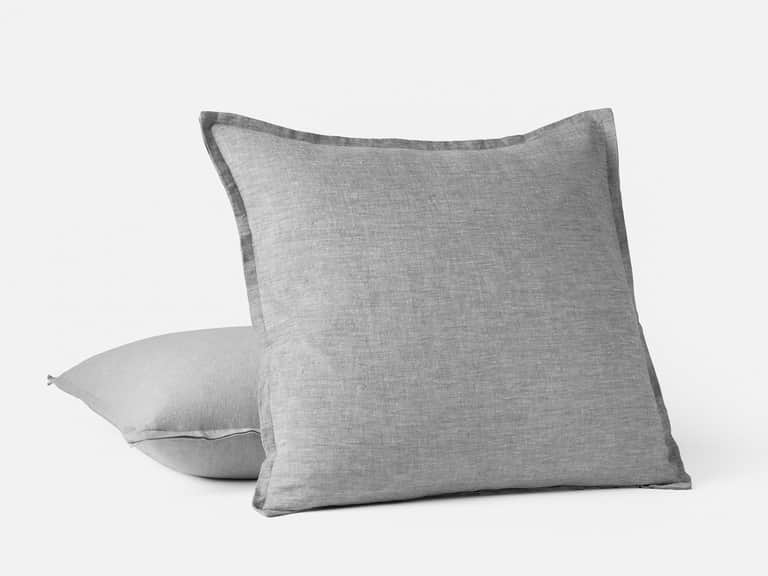
The phrase “sheet set” sounds straightforward, but the contents can vary by size and by manufacturer. The supplied Coyuchi description identifies a flat sheet, a fitted sheet, and pillowcases, with pillowcase counts or sizes depending on the set configuration. It notes, for example, that the Twin configuration includes one Standard/Queen pillowcase, while Full and Queen configurations include two Standard/Queen pillowcases and King or California King configurations include two King pillowcases.
Use the exact size-specific contents shown at the time of purchase. A broad description may summarize several configurations at once, and a page can be updated. Confirm the number and dimensions of pillowcases, whether the flat and fitted sheets are included, and whether the fitted sheet corresponds to your mattress size. This matters especially if you have extra pillows, nonstandard pillow dimensions, or a second pillow arrangement for reading or support.
Some shoppers prefer a flat sheet; others sleep directly beneath a duvet cover and rarely use one. Some already own pillowcases that work well. The best set is not necessarily the one with the most pieces—it is the one whose contents match the way you make and use the bed. If you do not use every included piece, compare the value of a full set with the option of buying individual components, when available.
Details such as a 15-inch pocket and full elastic describe how the fitted sheet is built; pick-stitched cuffs describe a finishing detail. Neither should be confused with the core contents of the package. A quick checklist beside the product page can prevent an otherwise avoidable mismatch between what you expect and what arrives.
Consider weave, finish, and construction together
Fabric names tell part of a textile’s story. Construction and finishing fill in more of it. In the supplied Coyuchi descriptions, the linen is described as relaxed, with pick stitching on the cuffs and a plant-based softener finish. These details speak to appearance and hand, but they are not substitutes for a complete specification. A cuff detail may affect the look of a flat sheet or pillowcase, while a finish can influence how the fabric feels when first opened.
Prewashing or softening can make a new textile feel less crisp than an untreated fabric. It may also contribute to a casual, gently rumpled appearance. However, “soft” is subjective, and a finish does not determine how a sheet will feel for every sleeper. If you prefer sharp, smooth bedding, a relaxed linen surface may not deliver the look you expect, even if the fabric is well made. If you like natural texture and do not mind wrinkles, that same character may be part of its appeal.
Inspect the product information for practical construction cues: pocket depth, full elastic, seams, cuffs, and stated fabric composition. If the listing omits a detail that matters to you, do not fill the gap with assumptions. Ask the retailer or manufacturer, or compare with another listing that provides the information clearly. A calm, evidence-based comparison is more reliable than judging quality by a single adjective.
Make sure the care routine fits your household
Everyday bedding is washed repeatedly, so care instructions belong near the top of a buying decision. The supplied Coyuchi descriptions generally direct users to machine wash linen in cold water on a gentle cycle and tumble dry on low. Some specify washing with like colors, and some advise using a plant-based detergent without bleach or whiteners. Check the exact instructions for the particular product and size configuration you are considering; directions can differ between fabrics and product versions.
Ask yourself whether the recommended routine is realistic at home. Do you have a washer with a gentle cycle? Can you use low heat, or do you prefer line drying? Are you willing to separate colors and avoid bleach-based products? A care label is not decoration. Following it helps you handle the textile as intended, while disregarding it can expose fibers to heat or chemicals the maker advises against.
For the linen sets described here, a simple routine may mean a cold, gentle wash and low-heat drying. Remove bedding promptly if the care guidance calls for it, and avoid overloading the machine so the fabric can move through the wash. If using a detergent, follow the product instructions and the care label rather than assuming that a particular formula is required. Bleach, whiteners, and fabric softeners should be used only when the textile’s directions allow them.
Wrinkles are part of linen’s familiar character. If a smoother finish is important, the product information says warm ironing may be an option for some sets. Treat ironing as an optional styling step, not a measure of whether the fabric is cared for correctly. The lowest-effort choice may be to accept a natural drape and fold or remake the bed when the fabric is fully dry.
Care claims should also be read carefully. “Machine washable” does not mean every cycle or temperature is suitable. A sheet that needs gentler laundering can still be practical for regular use, provided the routine fits your household. The best bedding-care plan is one you can follow consistently, not an ideal routine that proves difficult to maintain.
Think about comfort over a full night
Linen is often described as breathable and temperature regulating. Those qualities may appeal to people who want a less enclosed feel or who find some bedding too warm, but no sheet can control bedroom temperature on its own. Room conditions, duvet weight, sleepwear, mattress materials, and individual comfort all contribute to how warm or cool a bed feels.
Descriptions of Coyuchi’s relaxed linen emphasize natural breathability and comfort across seasons. Consider that as a material characteristic to explore, not a promise that the same temperature experience will suit every sleeper. A person who tends to feel warm may value airflow; another may prefer the familiar smoothness of cotton. A textured sheet can also feel different on bare skin than it does through sleepwear.
If you are moving from another fiber, give the differences some thought before making a decision. Linen’s surface is not designed to imitate the slippery smoothness of sateen or the crispness associated with percale. Its appeal often lies in a combination of texture, weight, drape, and an appearance that becomes more relaxed with use. The right choice is the one you want to return to night after night.
Compare value without relying on a single number
Price alone cannot explain whether a sheet set is a sensible everyday choice. Nor can one technical figure, such as pocket depth or fabric weight. A more useful assessment weighs the full package: fiber and certification information, construction, fit, set contents, care demands, and the way the fabric is likely to feel to you.
For a practical comparison, write down the details from each candidate set in the same order. Record the fiber content, named certification, stated origin, pocket depth, fitted-sheet construction, care instructions, included pieces, and any dimensions that matter. This puts different listings on common ground. It also exposes missing information, which is valuable in itself when deciding whether you have enough evidence to proceed.
Think in terms of expected use. If the fitted sheet is the component you replace most often, precise mattress fit may matter more than decorative finishing. If you wash bedding frequently, a care routine you can repeat without difficulty may carry substantial value. If texture is central to comfort, the fabric description and your response to linen’s natural hand may be more important than a long list of secondary details.
Long-term durability is difficult to judge from a brief product description alone. The supplied information presents the linen as durable and designed to soften with washing, but actual wear depends on laundering, use, fit, and handling. Treat longevity statements as product guidance, not a guaranteed lifespan. Clear care instructions and thoughtful construction details can help you make a more informed estimate, but no specification removes the uncertainty of everyday use.
A concise checklist before choosing
Fabric and sourcing
- Confirm the stated fiber content.
- Note whether the listing distinguishes flax growing from linen weaving.
- Check the named certification and what the product says it covers.
- Decide whether linen’s texture and relaxed drape suit your preferences.
Fit and package
- Measure mattress length, width, and depth with toppers included.
- Compare that depth with the stated pocket measurement.
- Check elastic construction and available mattress sizes.
- Verify the exact sheet and pillowcase count for your chosen size.
Care and routine
- Read the current wash and drying instructions.
- Decide whether cold, gentle laundering and low heat fit your habits.
- Check directions about detergent, bleach, and color separation.
- Consider whether you are comfortable with linen’s natural wrinkles.
Everyday comfort
- Compare the fabric’s described hand with sheets you already enjoy.
- Consider your bedroom climate and preferred sleep surface.
- Separate measurable specifications from subjective comfort claims.
- Look for unanswered questions before making your decision.
The useful answer is in the details
Evaluating Coyuchi sheet sets for everyday use is less about finding a perfect-sounding description than understanding how a textile will meet the habits of your home. The supplied Organic Relaxed Linen Sheet Set details offer several concrete points to assess: 100 percent organic flax, French-grown fiber, weaving in Portugal, GOTS certification, a fitted sheet with a 15-inch pocket and full elastic, and machine care described as cold and gentle with low-heat drying.
Set those facts beside your own measurements and preferences. Confirm what comes in the size you want. Decide whether the care routine is sustainable for your household. Consider whether relaxed linen’s texture and natural drape appeal to you, rather than assuming that a fiber’s reputation determines comfort. If something important remains unclear, seek a product-specific answer before comparing the final cost.
In the end, good bedding is not defined by a label alone. It is the fabric that fits your mattress, works with your laundry routine, and feels welcoming when the room goes quiet. A few careful checks before choosing can make the difference between a sheet set that merely looks promising and one that earns its place in the nightly rhythm of home.