The foundational question: what do the labels certify?
In a world where conversations about sustainability, health, and home ethics proliferate, linen certifications function like a compass. They do not guarantee perfection, but they provide a structured framework to assess fiber origin, processing methods, chemical safety, and social responsibility. The two most influential standards in the linen bedding market today are GOTS and OEKO-TEX. Each serves a distinct purpose and together they offer a credible map for the conscientious shopper.
GOTS, or the Global Organic Textile Standard, is the most widely recognized organic textile certification globally. It covers the entire supply chain—from the source of the organic fibers, through environmentally and socially responsible manufacturing, to packaging and labeling. A GOTS certificate indicates that the textiles contain a minimum of 70% organic fibers and meet stringent criteria for ecological impact, chemical usage, wastewater treatment, worker safety, and fair labor practices. Practically, when you see a GOTS label on a linen sheet or duvet cover, you’re looking at a product with a trackable chain of custody from farm to finished textile.
OEKO-TEX, on the other hand, emphasizes chemical safety. Its Standard 100 program certifies that every component—fibers, yarns, trims, and even the accessories—meets strict limits for a broad range of harmful substances. It is not a sustainability label by itself, but it is a robust assurance that the textile is free from a long list of chemicals that could irritate skin or pose health risks. For buyers with sensitive skin or allergy concerns, OEKO-TEX is a practical quality signal that complements a broader sustainability story.
Together, these certifications provide a layered confidence: GOTS confirms organic fiber sourcing and responsible processing; OEKO-TEX confirms chemical safety at every stage. When a linen product carries both, the buyer gains a compelling combination of environmental responsibility and consumer safety.
Certifications in the real world: how they translate to our catalog
In our curated Bedding, Sheets, and Duvet Covers categories, the presence of GOTS and OEKO-TEX labels serves as a practical shorthand for quality. Consider Naturepedic’s Organic Linen Sheets, Coyuchi’s Organic Relaxed Linen Collection, Libeco’s Linen Covers, and Coyuchi’s pillow covers—these brands frequently foreground organic and safety certifications as part of their storytelling. The underlying textile performance—breathability, moisture management, and skin-friendliness—often aligns with the certification claims, providing both a tactile and trust-based dimension to the buying experience.
For example, a GOTS-certified organic linen sheet set offers assurance that the flax fibers and linen processing meet strict organic standards, which often translates into a softer, evolve-soft feel after repeated washings. An OEKO-TEX certified duvet cover ensures that the fabric and finishes used on the cover comply with chemical safety protections, potentially reducing the likelihood of skin irritation for sensitive sleepers. In a practical sense, certifications influence long-term durability, color retention, and wash integrity—attributes that matter to households that rely on linen for year-round comfort.
What to look for when you read a label
When you hold a linen product in your hands, the certificate on the packaging or product page is your map. Here are the essential checks that translate certification language into everyday shopping wisdom:
- Certification scope: Does the label indicate GOTS, OEKO-TEX, both, or neither? If both, you are seeing a strong assurance of organic integrity and chemical safety.
- Fiber content and percentage: For linen, expect 100% flax or 100% linen. Some blends carry different performance traits, but certifications typically specify the primary fiber and its processing.
- Geographic origin: Certifications often require traceability from fiber origin to product finishing. Check if the label clarifies where the fibers were grown and where the linen was woven and finished.
- Processing details: GOTS involves restrictions on dyes, finishers, and wastewater management. OEKO-TEX focuses on final product safety. Understanding these scopes helps you contextualize the product’s environmental and health claims.
- Social criteria: GOTS includes social criteria that address labor conditions. This aspect connects the textile to a broader ethical framework beyond the fabric itself.
In practice, you may find a product with a GOTS label but no OEKO-TEX certification for its trims or packaging. While the core fiber may meet organic standards, chemical safety is still worth confirming for the entire product. Conversely, an OEKO-TEX certification on a linen product without GOTS does not guarantee organic fiber sourcing but does confirm chemical safety for the tested components. Your choice may hinge on skin sensitivity, environmental priorities, and budget considerations.
Three key historical voices that illuminate linen’s story
To ground our modern discussion in a broader narrative, we turn to three figures spanning different eras who illuminate linen’s enduring relationship with human life—from ancient textile traditions to contemporary sustainable practice.
Hypatia of Alexandria (c. 355–415 CE)
A philosopher, mathematician, and teacher whose era bridged early ancient textile trades and emergent scientific inquiry, Hypatia’s world relied on natural fibers such as linen for daily life, ritual, and scholarly spaces. Linen’s cool touch in the Mediterranean climate made it a practical choice in scholarly settings and clergy attire. Hypatia’s legacy invites us to consider how linen’s properties—thread strength, breathability, and comfort—were woven into the social fabric of knowledge and learning, long before modern certifications existed.
Leonardo da Vinci (1452–1519)
The Renaissance master’s notebooks reveal experiments with textiles, woven structures, and color fastness—an era that advanced the science of fibers and dyes. Linen remained a symbol of practical luxury and daily reliability. Da Vinci’s era foreshadowed the modern insistence on fabric performance across seasons, a thread that continues into today’s certification-driven language around linen textiles.
Greta Thunberg (b. 2003)
In the 21st century, Greta’s voice helped illuminate the climate conversation that now envelops textile production. Her perspective foregrounds the urgency of sustainable materials and responsible supply chains. The modern linen movement—organic farming, responsible finishing, and transparency about processing—echoes Greta’s call for accountability, aligning consumer comfort with planetary stewardship. Certifications like GOTS and OEKO-TEX are part of the actionable toolkit that empowers shoppers to align their bedding choices with environmental and social values.
Case studies from our catalog: how certifications shape comfort and care
The following product snapshots illustrate how certification narratives translate into tangible bedding experiences. While this article foregrounds understanding, the catalog demonstrates how certification status often accompanies material performance, durability, and washability in real-world use.
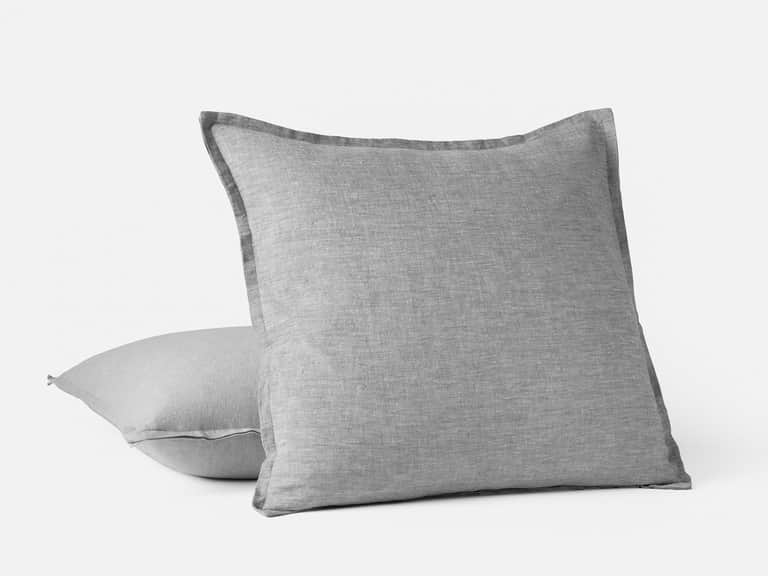
Organic Relaxed Linen Decorative Pillow Cover – 4907 (Coyuchi)
A pillow cover that marries 100% organic linen with a washed, relaxed hand. While primarily decorative, its certification and fabric choice signal a broader standard of care—organic sourcing and low-impact finishing—around a single, easy-care accessory.
Key features: 22x22 inches, garment-washed linen, plant-based softener finish, zipper closure for maintenance.
Organic Relaxed Linen Fitted Sheet – 3530 (Coyuchi)
A 100% organic flax linen sheet with a 15" deep pocket and full elastic. Certification context suggests responsible fiber sourcing and processing, while the relaxed linen drape emphasizes year-round comfort.
Key features: GOTS-certified, French flax, linen woven in Portugal, plant-based softener finish.
Practical tips for shoppers who value certification
As you plan a linen refresh, consider a layered approach to certification and product performance. Start with GOTS as the baseline for organic fiber and ethical processing. Then look for OEKO-TEX to reinforce chemical safety across the fabric and finishing processes. Finally, read supplier transparency statements: many brands publish supplier lists, test reports, and wastewater management commitments. This transparency helps you understand not only what you are buying, but how it was made and by whom.
- Compare product pages across brands to identify where certifications are declared and what they cover (fiber, dye, trims, packaging).
- Look for third-party verification statements or test reports (where available) that accompany certification labels.
- Consider your skin sensitivity and climate needs. Organic fibers paired with stringent chemical safety standards can translate into greater comfort and lower irritation risk, especially for bedding that contacts skin nightly.
For readers navigating the broader digital catalog of bedding, Sheets, and Duvet Covers, these considerations become a practical framework for decision-making. The goal is not only tactile luxury, but also informed confidence in the fiber’s journey from flax field to linen sheet—and the people and processes along the way.
A closing view: why linen certifications matter for the long arc of your home
The linen in our homes has carried civilizations, climates, and daily rituals for millennia. In modern wardrobes of textiles, certification marks are not merely bureaucratic stamps; they are living signals of values—of health, of ecology, and of the labor that brings fiber to fabric. GOTS and OEKO-TEX, when read with care and curiosity, become a way to connect the bedroom to a larger story—one of sustainable stewardship, durable design, and mindful consumption. As you select your next set of linen sheets or a decorative pillow cover, let the certification be a beacon that guides you toward a resting place that is not only beautiful, but responsible and safe for years to come.
— The National Geographic Style, Applied to Textile Truths
Selected product reference (for display): Organic Relaxed Linen Decorative Pillow Cover by Coyuchi. Certification and product details underscore organic sourcing, with a relaxed wash for softness and a textured surface that wears gracefully over time.
Product reference
Organic Relaxed Linen Decorative Pillow Cover – Coyuchi
Label: GOTS and OEKO-TEX compatible claims where applicable; 22x22 in. Washed linen finish.