Bedding · Buying guide
How to Judge the Long-Term Value of Naturepedic Organic Sheets
The price on a sheet set is only the first number in a longer story. Fit, fabric feel, care requirements and the way the material responds to years of washing all shape its real value. For Naturepedic organic linen sheets, a closer look at the specifications can help you decide whether the set suits your mattress, your routines and your idea of comfortable sleep.
Buying bedding can feel like a choice between numbers and sensations. A label offers measurable details—fiber, weight, pocket depth, certification—while the experience of sleeping on a sheet is intimate and difficult to reduce to a chart. The useful question is not simply whether a set costs more or less than another. It is whether its material, construction and upkeep match the way it will be used.
Naturepedic organic linen sheets are described as being made from French-grown flax and certified to the Global Organic Textile Standard, or GOTS. The cited specifications include a 185-gram-per-square-metre fabric weight, a 15-inch fitted-sheet pocket, and machine-wash instructions. These details offer a starting point for evaluating bedding value, but they do not answer every question. Mattress dimensions, laundering habits, preferred texture and the exact set contents matter too.
A careful comparison keeps claims in proportion. Linen is often valued for its airy, textured feel and its ability to manage moisture, but individual comfort depends on the sleeper, room and bedding layers. Organic certification can provide meaningful information about production standards, but it does not guarantee a particular softness or lifespan. The best assessment joins the label to the daily realities of the bed.
What long-term value means for bedding
Value is the usefulness a product delivers across the time it remains comfortable, functional and in service. It is not synonymous with a low purchase price, nor does a high price prove that a sheet set will last. A lower-priced set that fits well, feels pleasant and survives regular laundering may be a better match for one household than a more expensive set with specifications that do not suit its mattress or care routine.
To think clearly about bedding value, separate the decision into several parts. First comes suitability: does the fabric feel right, and will the sheets fit the bed? Next is maintenance: can you follow the care instructions without inconvenience? Then comes durability, which depends on fiber quality, construction, use, washing and drying—not on a single marketing phrase. Finally, consider how much of the set you will actually use and whether the included pieces meet your needs.
It can help to imagine the sheet set in ordinary circumstances rather than in an idealized bedroom. Will it be washed weekly? Does the household use a tumble dryer? Is the mattress topped with a thick protector or topper? Does the bed share space with pets, children or frequent guests? These details influence wear and practicality. A sheet that is technically well made but constantly slips off an overdeep mattress, for example, can feel like poor value in everyday use.
One simple method is to estimate the cost per year of use. Divide the purchase price by the number of years you reasonably expect to keep the set in satisfying condition. This is not a forecast or a guarantee; it is a way to compare options using the same assumptions. Because lifespan is uncertain, test more than one scenario. A set that remains comfortable for several years may compare differently from one that needs replacement sooner, even if the initial prices are far apart.
Understand the linen, not just the word “organic”
Linen is made from flax. The Naturepedic specifications describe French-grown flax, a 100 percent organic flax-linen fabric and a 185 gsm weight. “Gsm” means grams per square metre, a measure of fabric mass per area. It can help distinguish a lighter cloth from a heavier one, but it should not be treated as a complete quality score. Weave, yarn characteristics, finishing and construction all contribute to how a fabric feels and performs.
In the hand, linen is often more visibly textured than smooth cotton percale or sateen. Some sleepers enjoy the dry, slightly irregular surface and relaxed drape; others prefer a smoother feel. Linen can soften with use and laundering, but how quickly and how much depends on the fabric and the way it is cared for. A description that says the material becomes softer over time is useful context, not a promise that every sleeper will experience the same change.
Breathability is another reason shoppers consider linen. The fiber and fabric structure can support airflow and moisture movement, qualities that may be welcome for people who sleep warm. Still, no sheet can control the whole sleep climate on its own. Room temperature, humidity, mattress materials, duvet filling, sleepwear and personal comfort all contribute. Statements about year-round use should therefore be read as a possible advantage, not a guarantee of the same sensation in every season or home.
Fabric weight can help you anticipate whether a sheet might feel relatively light or substantial, but comparing gsm across products is most useful when other details are also similar. A heavier fabric is not automatically more durable, and a lighter one is not automatically less comfortable. When possible, handle a sample or examine the fabric in person. If that is not possible, use published specifications alongside a clear returns policy and reliable care information.
Thread count is sometimes treated as a shortcut for sheet quality, especially in cotton bedding. It is less useful when comparing different fibers and constructions. Linen is assessed through a different combination of yarn, weave, weight and finishing. For a practical comparison, prioritize fiber composition, feel, dimensions and construction over a single numerical claim that may not translate consistently from one textile to another.
Measure the mattress before judging the fitted sheet
A fitted sheet’s pocket depth is one of the most consequential specifications because a poor fit can undermine comfort from the first night. Naturepedic’s listed 15-inch pocket depth gives shoppers a point of reference. It does not mean every mattress up to that height will fit perfectly: mattress shape, elastic placement, fabric stretch, shrinkage and the thickness of any topper or protector can affect the result.
Measure the bed from the bottom edge of the mattress to the highest point of the sleeping surface, including any topper you intend to leave in place. Check all sides, since pillow-top designs and layered sleep systems can vary in height. Compare that measurement with the manufacturer’s stated pocket depth, and look for details about all-around elastic or reinforced corners. The available Naturepedic description specifies a 15-inch pocket but does not, by itself, settle every question about a particular mattress configuration.
Also confirm the mattress size. Queen, king and California king are not interchangeable, and dimensions can vary slightly among bedding makers. A set’s listed size should correspond to the mattress rather than simply to the room or bed frame. If you are buying replacement sheets, check whether your mattress is an uncommon size, unusually deep or fitted with a bulky pad.
Fit has a practical effect on longevity. A sheet that is stretched tightly over a mattress may put extra strain on seams and elastic. One that is too loose can shift, bunch or come away at the corners. Neither outcome should be assumed from pocket depth alone, but measuring beforehand reduces the likelihood of an avoidable mismatch. For a sheet set, check the dimensions of the flat sheet and pillowcases as well as the fitted sheet.
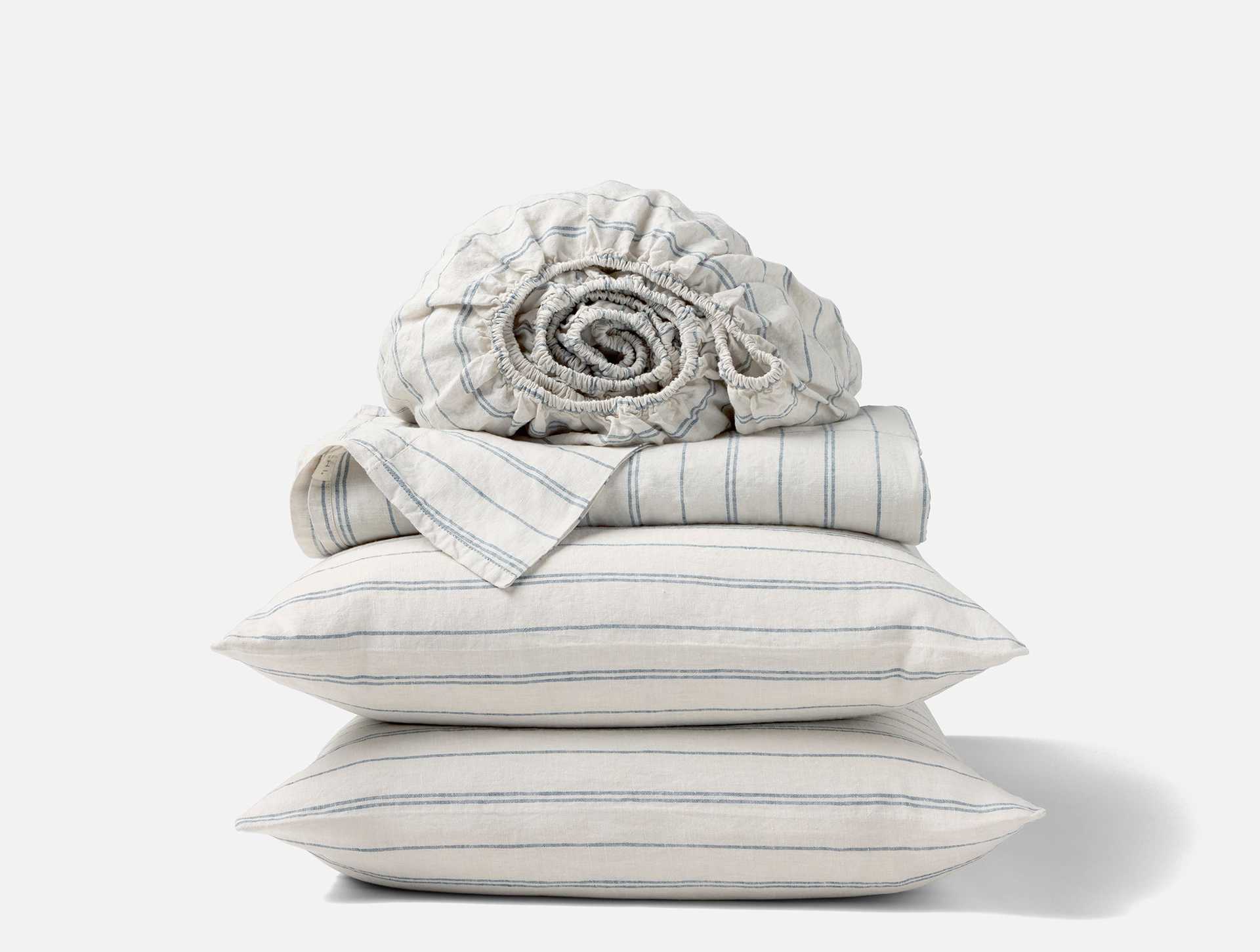
Set contents deserve their own check. The described Naturepedic sheet set includes a flat sheet, a fitted sheet and two pillowcases, with stated pillowcase dimensions varying by size. Confirm the exact pieces and measurements for the size you plan to order. A set is more useful when its components match the pillows and bed arrangement you actually use.
Read the GOTS claim with care
GOTS is a certification standard for organic textiles. In consumer terms, its value lies in providing a defined framework for organic fiber and processing requirements, rather than asking shoppers to rely only on a general sustainability statement. The Naturepedic product information identifies the sheets as GOTS-certified and describes them as made in a GOTS-certified organic facility.
A certification is not a direct measurement of softness, comfort or expected lifespan. Those are separate qualities. Nor should a single certification be taken to mean that every environmental or social question has been answered. Shoppers who want to verify a claim can look for the certificate or license details, check the certification body and confirm that the product falls within the scope of the certification. The precise label and documentation can change, so it is sensible to consult current product information.
Origin statements also deserve precise reading. The available description says the flax is grown in France and that the sheets are made in India in a GOTS-certified facility. The fiber’s growing origin and the place where fabric or finished bedding is made are distinct pieces of information. When supply-chain transparency matters to you, look for each stage that is disclosed rather than assuming that the fiber origin identifies the manufacturing location.
For an informed decision, treat certification as one useful part of the evidence. Consider it alongside fiber composition, manufacturing information, care instructions, product dimensions and your own comfort priorities. It can help clarify how a textile is represented and produced, but it cannot replace a practical assessment of whether the product suits your home.
Estimate the care burden before you buy
Care is part of ownership cost. A sheet set that requires a routine you can follow consistently is more likely to remain in good condition than one whose instructions conflict with your laundry habits. The described Naturepedic organic linen sheets can be machine washed warm, tumble dried on low and warm ironed if desired; the instructions also say not to bleach. Check the current sewn-in label and product guidance, since instructions can differ among versions or change over time.
Before buying, ask whether the temperature and drying settings are realistic for your household. A low-heat dryer cycle may take longer than a hotter one. Line drying can reduce tumble-dryer use but takes time and space. Warm washing may work well for routine care, but separating colors and avoiding bleach are important considerations where applicable. The right routine is the one that follows the product’s instructions while fitting your available equipment and schedule.
Washing technique can influence wear. Overloading a machine can restrict movement and put unnecessary strain on textiles. A gentle, appropriately sized load helps sheets rinse and move more freely. Promptly removing bedding from the dryer may also help limit set-in wrinkles. Linen naturally wrinkles, so ironing is a preference rather than an automatic requirement; the description lists warm ironing as an option, not a mandatory step.
Detergent and additives are worth considering too. Use a suitable amount of detergent and follow both the textile label and the machine guidance. Avoid bleach where the product instructions prohibit it. If you are choosing a detergent for a specific sensitivity, assess the detergent separately from the sheet’s fiber and certification claims. Product descriptions do not establish that any bedding will prevent allergies or provide a medical benefit.
Care also includes how sheets are stored and rotated. Keeping a second set in circulation can reduce the number of wash-and-dry cycles each set receives and make bed changes easier, though it adds to the initial outlay. Store clean bedding in a dry, ventilated place. A regular rotation may help distribute use, but it cannot guarantee a particular lifespan.
Separate durability evidence from durability language
Descriptions often call linen durable or long-lasting. These words express an expectation, but the product information provided does not include a tested lifespan or a wear guarantee. Durability depends on the fabric and its construction as well as repeated handling: friction, laundering, drying conditions, sunlight, stains and repairs all matter. A sheet can be made from a strong fiber and still wear sooner under harsh or unusually frequent use.
Look for concrete information where available. Fiber composition, fabric weight, construction details, seam finishing and laundering limits are more useful than a broad promise alone. Ask whether the seller publishes a warranty, repair policy or replacement-part information. If those details are absent, do not infer that the product has no durability; simply recognize that its expected service life is not established by the description.
Before use, inspect the delivered set for consistent stitching, secure hems, clear care labels and any defects. Follow the maker’s guidance from the first wash. If an issue appears, document it and contact the seller within the applicable return or warranty period. These steps do not predict how long bedding will last, but they help protect the value of the purchase.
Make comparisons on equal terms
Comparing Naturepedic sheets with another set is most informative when you compare like with like. A linen set and a cotton set may differ in texture, laundering needs and the way they drape, so price per set alone can conceal meaningful differences. Compare the same mattress size, number of pieces, fiber content, fabric weight when available, pocket depth, certification scope, care requirements and return conditions.
It is also useful to distinguish product-level details from broad category assumptions. For example, the Naturepedic listing identifies organic French-grown flax, GOTS certification, a 185 gsm fabric and a 15-inch fitted-sheet pocket. Those are specific attributes to check against competing products. They do not establish that every organic linen sheet shares the same origin, weight, construction or performance.
Compare the set’s useful contents as well. If one option includes two pillowcases and another includes a different number, the prices are not directly equivalent. A shopper who already owns compatible pillowcases may value a fitted-sheet-only option differently from someone building a complete bed. Consider whether the set covers the actual need, not whether its box contains more pieces.
Finally, account for uncertainty honestly. Retail pricing and availability can change, while individual experiences with feel and lifespan differ. If the fabric is unfamiliar, a return window or sample policy may be meaningful. Read its conditions before ordering, particularly for opened or laundered bedding. A clear route to resolve fit or quality concerns can be part of practical value, even though it does not change the fabric itself.
A practical checklist for judging value
Before choosing a sheet set, use this short review to connect the specifications to your own bed and routines:
- Confirm the fiber: Check whether the set is described as 100 percent linen, a blend, or another material.
- Understand the weight: Treat 185 gsm as a fabric specification, not a stand-alone quality ranking.
- Measure the mattress: Include toppers and protectors when comparing your bed’s total height with the 15-inch pocket depth.
- Check every dimension: Verify mattress size, flat-sheet measurements and pillowcase dimensions for the specific set.
- Verify the certification: Review current GOTS documentation and what the claim applies to.
- Read the care label: Confirm that warm washing, low tumble drying and avoiding bleach fit your household’s routine.
- Assess the feel: Decide whether linen’s naturally textured hand is likely to suit your preferences.
- Compare complete packages: Account for included pieces, warranty terms, return conditions and any additional costs.
- Plan for ordinary use: Consider how often the sheets will be washed and whether you will rotate them with another set.
- Keep expectations measured: Certification and material claims provide information, but do not guarantee identical comfort or lifespan for every home.
A final measure: does it suit the life of your bed?
The long-term value of Naturepedic organic sheets depends on more than their initial cost. French-grown organic flax, GOTS certification, a stated 185 gsm fabric weight, a 15-inch fitted-sheet pocket and machine-wash care instructions give shoppers concrete details to examine. Those details can be compared with competing sheets and with the needs of a particular mattress.
Yet a specification becomes useful only when it meets a real-world requirement. A pocket depth matters when it fits the mattress; a care label matters when its routine is manageable; a breathable, textured fabric matters when its feel is welcome at night. Certification is meaningful when shoppers understand what it covers, and durability claims are most persuasive when supported by specific construction or warranty information.
Good bedding value is therefore less like spotting a bargain and more like reading a small landscape: the fiber, the weave, the mattress beneath it, the habits around the wash and the years of use ahead. Weigh those elements together, check the details against your own circumstances, and the price becomes one part of a decision grounded in comfort and practical evidence.